The story as documented by its source
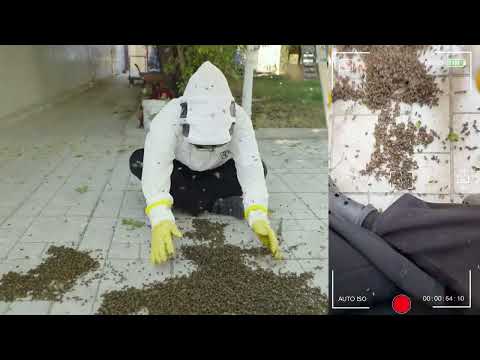
The 3 Beez published a video of a large colony-rescue operation and described the cluster as more than 70,000 bees. The footage shows a large cluster and relocation or rehousing steps while preserving the site’s privacy.
A resting swarm is not a colony inside a wall
Not every cluster needs the same plan. A swarm is often a temporary mass resting while scout bees search for a site. An established colony inside a wall or roof may contain comb, honey and brood that require removal and repair. Cornell notes that extracting a colony from a cavity is more complex than collecting a swarm, and that leftover nest material can attract pests or create moisture problems. A trained responder therefore begins with assessment: What kind of situation is it? Where is the entrance? Is it in a public area or near children? Is anyone nearby at particular risk from stings? A photograph taken from a safe distance can help the beekeeper prepare, but a bystander should not approach for a better angle. One field video cannot serve as a universal home-removal recipe.
Why the queen can influence the cluster
During relocation, worker movement can help a trained beekeeper assess whether the group is settling into a box, and the queen’s presence can be central to cohesion. The aim is to reduce disturbance, protect people and move the colony into a suitable, ventilated and secure home. These remain field skills for a trained specialist.
If you see a swarm: what to do and avoid
Stay back, keep children and pets away, and take a photograph only from a safe distance. Do not spray pesticide or water, strike the branch or seal the entrance of an established colony; those actions may agitate bees or complicate removal. Contact an experienced beekeeper or appropriate local service and describe the approximate size, location, height and whether bees are entering a cavity. If someone is stung and develops difficulty breathing, major swelling, dizziness or another sign of a severe reaction, call local emergency services immediately. This article does not teach swarm capture because risk varies with the insects, site and people present. Human and colony safety matter more than recording a clip or copying a method seen on social media.
After the colony is relocated
After relocation, the team monitors whether the colony settles and needs further care, and checks that the original site does not retain comb or honey that could attract pests. Human and colony safety, along with site privacy, remain central to the operation.
From field knowledge to choice
Explore The 3 Beez honey collection
Discover products, origins and grades, then shop through the official store.
Visit The 3 Beez storeSources
Direct links to the organisations and materials referenced in this article.
- The 3 Beez — video documenting a rescue described as more than 70,000 bees
Field video from the official account; number estimated by the publisher · Approx. 2025-11
- The 3 Beez — dated companion post for the operation
Related post from the official account · November 15, 2025
- Cornell Pollinator Network — honey-bee swarm removal guidance
University extension safety guidance · Current; reviewed 2026-08-22
Important note
Do not attempt to move a swarm or colony yourself. Keep children and animals away, do not spray or block the bees, and contact a trained beekeeper or appropriate service—especially where sting allergy is a concern.